DialedSpec may earn a sales commission from merchant links on this page at no extra cost to you. Read how DialedSpec earns affiliate commissions
A technical look at how burr design, axle alignment, and step resolution shape cup clarity—and which electric or manual mills suit your daily brew routine.
In specialty coffee and espresso extraction, no single variable affects cup quality more than particle size uniformity. While standard blade choppers shatter roasted coffee beans unevenly into a chaotic slurry of coarse chunks (“boulders”) and microscopic dust (“fines”), a burr grinder shears whole beans progressively down to a predictable target diameter.
Boulders lead to under-extraction—yielding sour, weak notes—while excessive fines over-extract almost instantly, clogging filter beds and depositing astringent bitterness. A properly aligned burr set produces a controlled particle distribution, unlocking the sweetness, acidity, and aromatic oils intended by the roaster.
Key Engineering Factors: What Makes a Burr Grinder Perform?
Selecting between electric countertops and hand-cranked mills comes down to three underlying mechanics:
1. Burr Geometry & Materials
Stainless steel burrs are CNC-machined with sharp cutting facets that slice cleanly through beans, generating fewer shattering fines. Ceramic burrs are molded and blunter, producing higher friction and more fines, making them better suited for budget or immersion brews rather than nuanced light roasts.
2. Step Resolution (Microns per Click)
Drip, Chemex, and French press brews tolerate broad adjustment gaps. Non-pressurized espresso setups require sub-millimeter precision. A movement of 15–25 microns per step allows fine-tuning extraction time by mere seconds without swinging wildly between choking and channeling.
3. Axle Concentricity & Rigidity
Dual ball bearings stabilize the central drive shaft against sideways torque. If an axle wobbles under the mechanical resistance of hard, dense, light-roasted beans, the burr gap shifts continuously, destroying grind consistency.
Precision Manual Grinders: Premium Burrs Without Motor Costs
For espresso enthusiasts and filter purists on a budget, hand grinders offer the highest grind consistency per dollar. By omitting electric motors and circuit boards, manufacturers invest heavily in precision CNC-machined steel burrs and rigid aluminum housings.
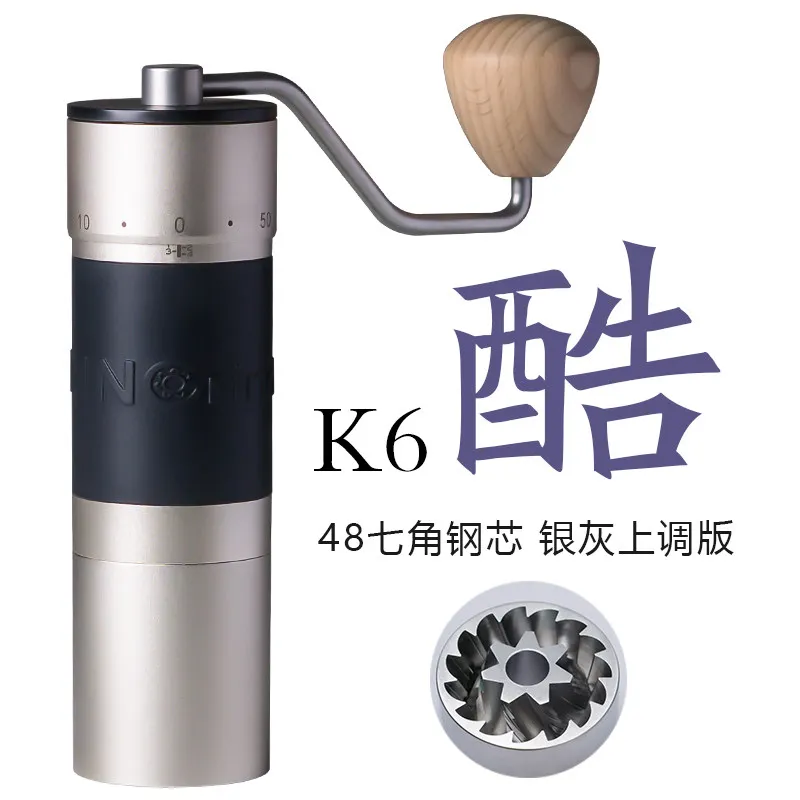
Kingrinder K6: True All-Rounder with External Micro-Stepping
The Kingrinder K6 features a 48mm heptagonal stainless steel burr set engineered to balance clarity in pour-overs with high unimodal density for espresso. According to Kingrinder's published specifications, the external collar provides a fine 16 microns of vertical pitch per click across 60 clicks per full rotation.
This ultra-fine step resolution solves the main limitation of traditional manual mills: micro-dialing unpressurized espresso baskets. The external collar also eliminates the need to unscrew the catch cup to tweak settings. It handles light-roast espresso and Aeropress with equal poise.
Timemore Chestnut C3 ESP Pro: Compact Portability with Folding Handle
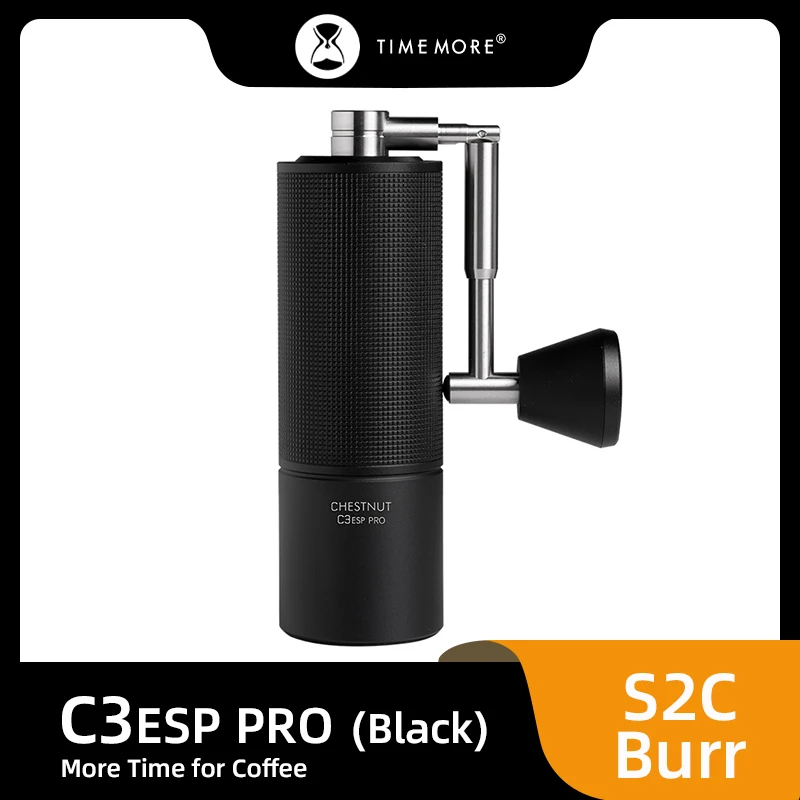
The Chestnut C3 ESP Pro builds on Timemore’s proprietary S2C (Spike-to-Cut) 38mm stainless steel burr architecture. In test benchmarks gathered by Slow Pour Supply, the C3 ESP variant upgrades the adjustment plate to approximately 0.0233mm (23.3 microns) per click with 30 clicks per revolution, giving users finer espresso control than the broader standard C3 model.
Equipped with a foldable crank handle, it collapses cleanly into a backpack or travel kit. While its 38mm diameter requires a few more crank revolutions than larger 48mm mills when grinding dense espresso doses, its aluminum unibody build offers excellent stability at an entry-friendly price point.
Electric Burr Grinders: Speed and Workflow Convenience
Manual grinding can become tedious when preparing coffee for multiple people or brewing large pots of drip coffee each morning. Countertop and portable motorized units prioritize effortless workflow over manual muscle.
Wancle Electric Conical Burr Grinder: Batch Brewing Countertop Workhorse
The Wancle electric grinder is built for everyday kitchen utility. With 28 stepped grind selections, it covers the spectrum from medium-fine (Moka pot, Aeropress) through standard drip and coarse cold brew or French press.
Having a dedicated hopper and timed dosing mechanism allows you to grind multiple doses without user fatigue. However, users should note that entry-level electric burr grinders of this class operate on broader step increments and may not reach the ultra-fine tolerances or micro-steps required to pull 9-bar espresso shots on non-pressurized commercial portafilters.

Rechargeable Cordless Burr Grinder: Pocket-Sized Electric Travel
For hotel rooms, camping setups, or minimalist office desks where wall outlets are awkward to reach, a USB-rechargeable mini burr grinder offers push-button convenience in a pocket-sized package.
Its compact lithium battery drives a low-RPM motorized burr mechanism, avoiding excessive heat transfer to the beans. While grinding speeds are modest compared to 120V/220V countertop motors, it eliminates hand-cranking entirely for single-cup pour-over or Aeropress preps.

Quick Decision Guide: Matching Method to Mechanism
| Brew Method | Required Burr Tolerance | Recommended Format |
|---|---|---|
| Unpressurized Espresso | Micro-steps (< 25 microns/click), steel burrs | Kingrinder K6 or Timemore C3 ESP Pro |
| Pour-Over & Aeropress | High unimodal clarity, low fine production | Kingrinder K6 or Timemore C3 ESP Pro |
| Daily Drip / Multi-Cup Batch | Medium consistency, high capacity hopper | Wancle Electric Conical Burr Grinder |
| Travel & Office Filter | Compact footprint, cordless operation | USB-Rechargeable Portable Grinder |
Editorial note: Grind sizes vary depending on bean roast degree, origin, and ambient humidity. Maintain burr alignment and clean burr teeth regularly with a dry bristle brush to prevent old coffee oil rancidity.