DialedSpec may earn a sales commission from merchant links on this page at no extra cost to you. Read how DialedSpec earns affiliate commissions
From gear-assisted 58mm benchtop extractors to portable camp levers, manual espresso puts flow profiling, pre-infusion duration, and pressure curves entirely into your hands.
Unlike motorized pump appliances that force water through coffee grounds at a rigid factory-set rate, a manual lever espresso machine turns extraction into a tactile, dynamic craft. By pulling or pressing a mechanical lever, you directly govern the hydraulic pressure applied to the coffee puck. This allows for prolonged soft pre-infusion, peak extraction at 6 to 9 bars, and a declining pressure tail that limits bitterness near the end of the shot.
However, operating without an automated boiler system introduces distinct technical variables. Achieving consistent, café-grade espresso requires careful attention to three engineering factors: thermal management, mechanical leverage, and portafilter architecture.
The Core Mechanics of Manual Extraction
- Active vs. Passive Heating: Unheated metal brew chambers require thorough preheating with boiling water to prevent thermal drop during extraction. Active PID heating elements eliminate this step.
- Leverage & Reduction: Generating 9 bar across a standard 58mm diameter basket requires significant force. Integrated reduction gears or extended lever arms make smooth, steady pressure profiles physically manageable.
- Pressure Gauge Feedback: Real-time visual feedback allows you to replicate winning recipes and rescue channeling shots by modulating hand pressure on the fly.
Active Temperature Control: The 58mm Standard
The greatest challenge in manual espresso has traditionally been temperature loss: room-temperature metal chambers rapidly sap heat from brew water before it hits the coffee bed. Incorporating an adjustable PID heating element directly into the group assembly addresses this vulnerability, giving manual brewing the thermal precision of a high-end commercial machine.
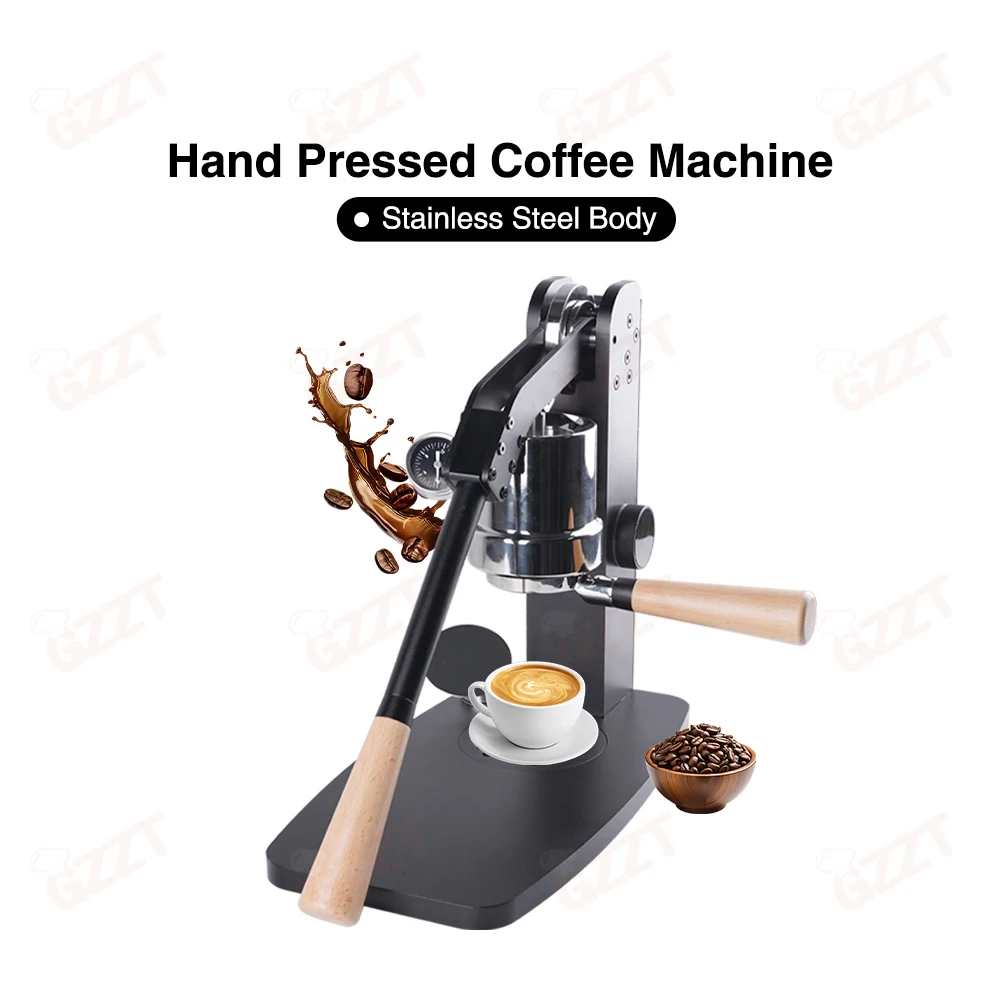
The GZZT CMFL002 targets baristas seeking commercial standard accessories alongside manual flow control. Built around an industry-standard 58mm basket, it accepts precision tampers, distribution tools, and aftermarket filter baskets. The integrated PID heating system (adjustable between 35°C and 95°C) maintains group temperature between shots, while its planetary reduction gear significantly eases the mechanical strain needed to sustain peak brewing pressures.
Countertop Mechanical Presses: Direct Feedback & Durability
For those who prefer a purely mechanical setup with zero electronics, heavy-duty lever stations offer exceptional longevity and tactile control. These machines rely on sturdy columns, manual water filling, and direct piston mechanics.
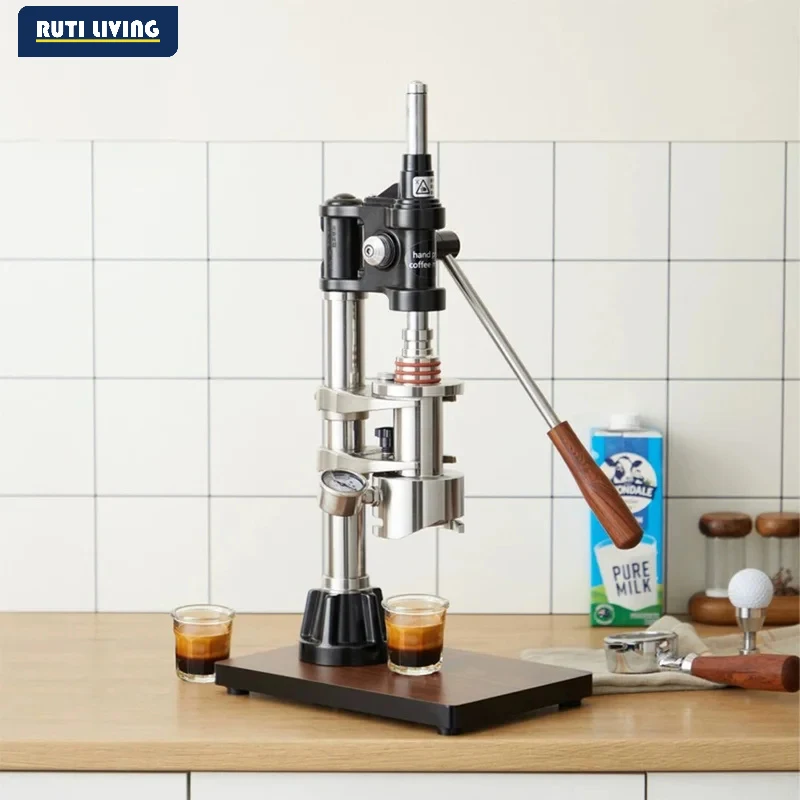
Heavy column-mounted presses, such as the RUTI LIVING Manual Espresso Maker, utilize a vertical rack-or-plunger system paired with a front-facing pressure gauge. This structure stabilizes the downward motion, preventing counter-tipping during high-pressure extractions while giving you real-time feedback to maintain a declining pressure profile (e.g., starting at 8 bar and tapering to 5 bar).
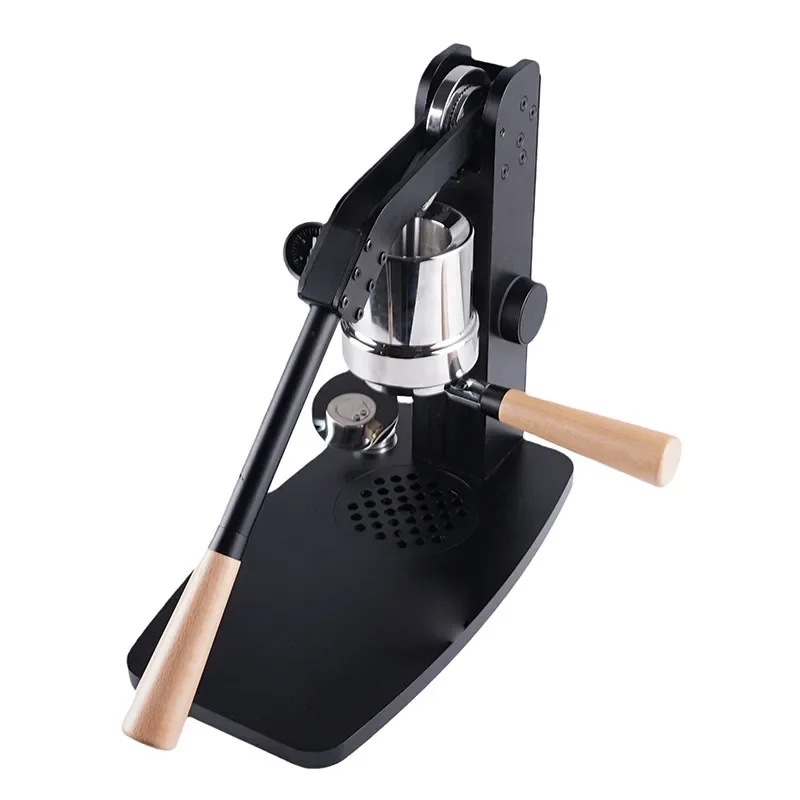
As an entry into countertop lever brewing, the Global MiniMech Hand Lever Press provides an open mechanical frame that delivers direct mechanical linkage to the piston. With an integrated pressure gauge, it provides the essential diagnostic feedback required to dial in grind sizes accurately without excess complexity.
Compact & Travel Manual Presses
When portability or counter footprint is paramount, compact manual presses trade larger thermal mass and standard 58mm sizing for lightweight utility.
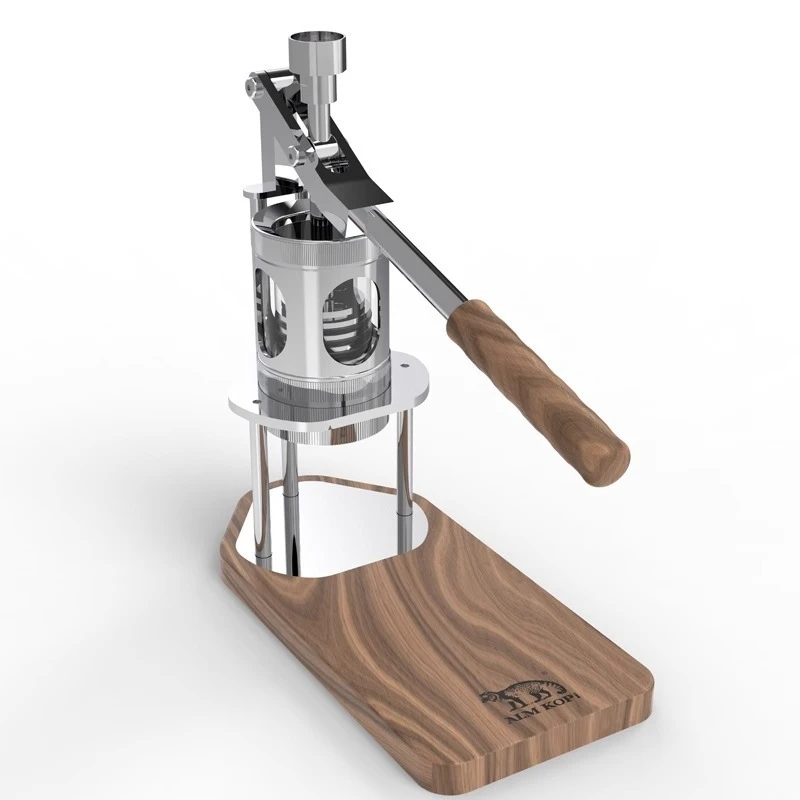
Designed with a smaller chamber and a streamlined wooden base, the Mini 6-9Bar Manual Espresso Maker operates efficiently in tight spaces, camp kitchens, or mobile workstations. Because the chamber volume is reduced, preheating takes less time and hot water volume, making it capable of producing authentic crema-rich espresso away from a plumbed kitchen counter.
Choosing the Right Setup for Your Routine
| Machine Type | Basket Format | Thermal Control | Best For |
|---|---|---|---|
| PID-Heated Lever (GZZT) | 58mm Commercial | Active Electric (35–95°C) | Home baristas wanting workflow convenience & standard accessories |
| Column Benchtop (RUTI) | Medium / Commercial Style | Manual Water Preheating | Dedicated home coffee bars seeking full mechanical durability |
| Classic Lever (MiniMech) | Standard Portafilter | Manual Water Preheating | Budget-conscious enthusiasts dialing in manual profiles |
| Compact / Travel (Mini 6-9Bar) | Proprietary / Compact | Low-volume Preheating | Travel, camping, and micro-kitchens |
Dialing In: A Recommended Manual Extraction Profile
- Thorough Chamber Prep: If your machine lacks active PID heating, run at least one full chamber of boiling water through the group to preheat the metal before locking in your coffee.
- Gentle Pre-Infusion: Lower the lever until the gauge reads 1.5 to 2.5 bar. Hold for 5 to 10 seconds to fully saturate the puck without disturbing the coffee bed structure.
- Ramp to Peak: Smoothly press down to hit 8 to 9 bar. Watch the flow rate; droplets should coalesce into an even, steady stream.
- Declining Pressure Tail: As the puck erodes and resistance naturally drops past the 20-second mark, let your pressure taper down to 4 or 5 bar to prevent over-extracting harsh, astringent compounds.